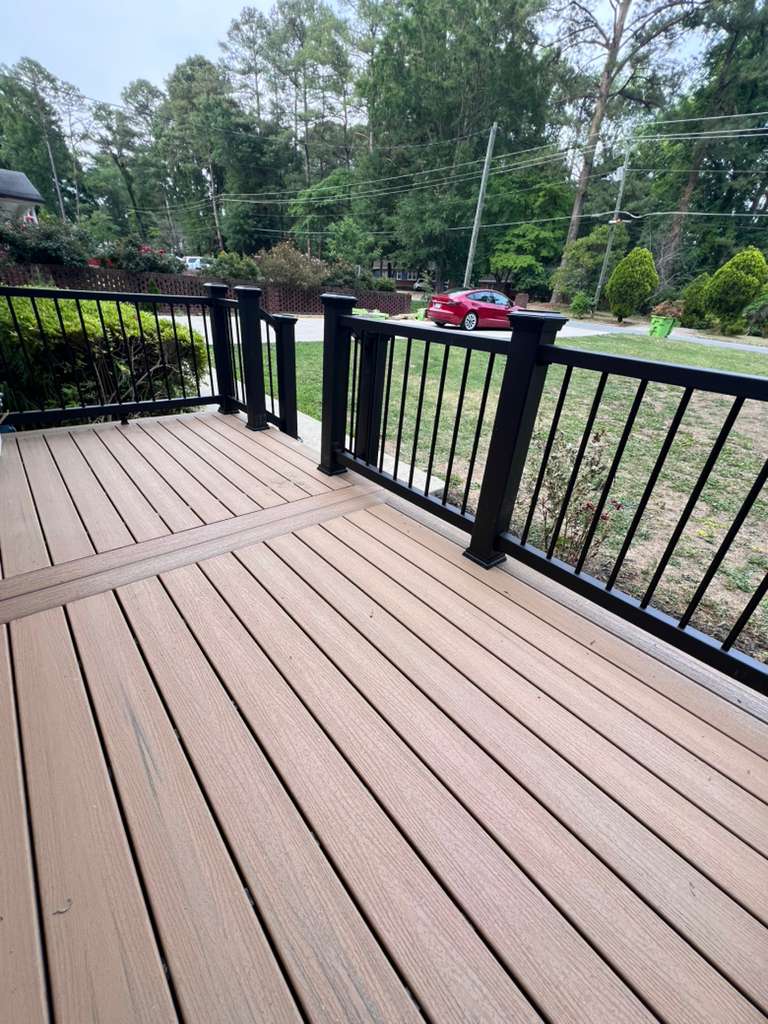
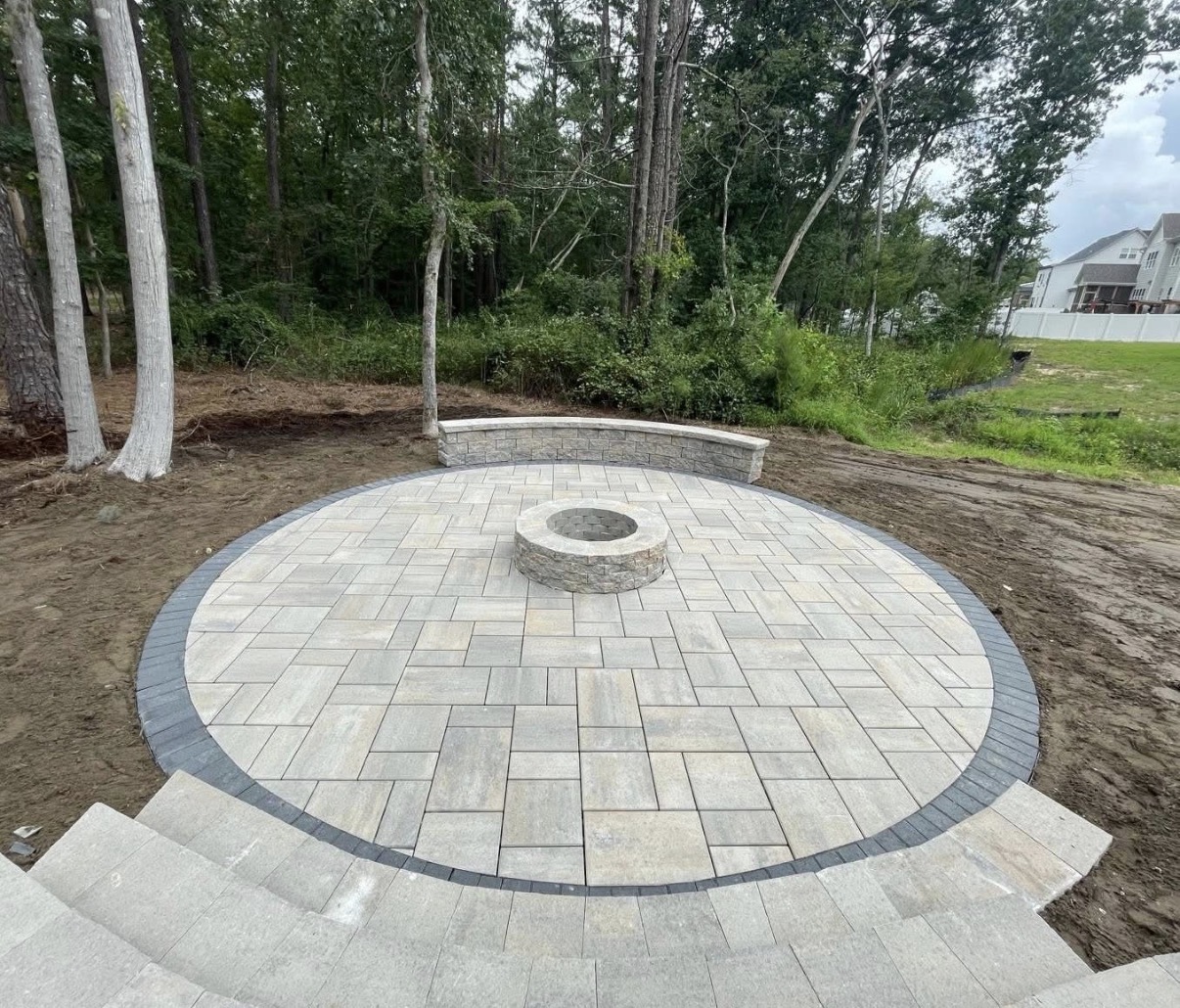
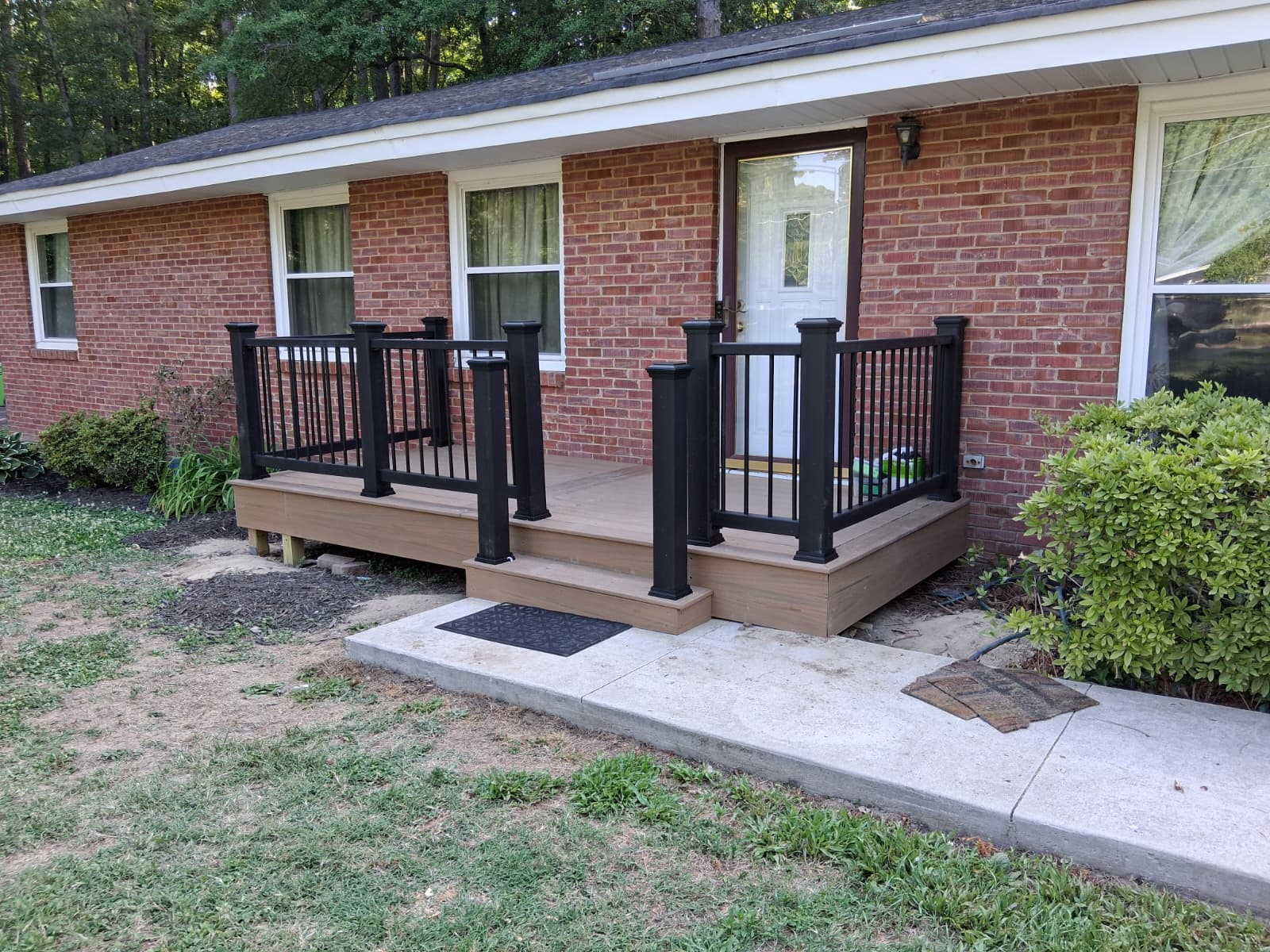
A deck is one of the best investments you can make in how you actually live in your home — but the material you build it from determines how much time you'll spend maintaining it versus enjoying it. In North Carolina, where summers are hot, humid, and pollen-heavy, that choice matters even more. Here's how composite and wood really compare for Triangle homes.
The quick verdict
| Factor | Wood (pressure-treated / cedar) | Composite |
|---|---|---|
| Upfront cost | Lower ($25–$40/sq ft) | Higher ($40–$70/sq ft) |
| Maintenance | Annual sealing/staining | Occasional rinse |
| Lifespan | 10–20 yrs with upkeep | 25+ yrs |
| Rot & mildew | Vulnerable in NC humidity | Highly resistant |
| Look & feel | Natural, classic | Consistent, modern |
Upfront cost vs lifetime value
Wood wins on day one. A pressure-treated deck is the most affordable way to get outside, and cedar adds beauty for a bit more. Composite — TimberTech, Trex, Fiberon — costs more to install, but the math changes over time. Factor in a decade-plus of stain, sealer, sandpaper, and weekends of labor for wood, and composite's higher upfront price often evens out. If you plan to stay in your home for years, composite tends to be the better lifetime value.
Maintenance — the real difference in NC
This is where our climate tips the scale. North Carolina humidity, summer storms, and shade-loving mildew are tough on wood. To keep a wood deck safe and good-looking here, expect to clean and reseal it roughly every year. Composite asks for little more than an occasional rinse — no sanding, staining, or sealing. For busy families, that's the headline benefit.
In our climate, the question isn't just "which looks best?" — it's "how many summer weekends do you want to spend maintaining it?"
Heat & comfort
One honest caveat: composite — especially in darker colors — can get warm underfoot in full afternoon sun. Lighter tones and shaded or covered areas stay cooler. Wood generally runs a little cooler but splinters and grays as it ages. For sun-blasted yards, we often steer clients toward lighter composite boards or a covered/screened design.
Look & feel
Wood has a warmth and natural grain that many homeowners love — and at first, nothing beats a freshly stained cedar deck. Composite has come a long way: today's boards have realistic grain, multi-tonal color, and hidden fasteners for a clean, seamless surface that won't splinter. It's less "natural," more "consistent and carefree."
So which should you choose?
- Choose wood if you want the lowest upfront cost or love natural grain and don't mind annual upkeep.
- Choose composite if you want decades of low-maintenance use and the best resistance to NC humidity, rot, and mildew.
- Either way, the deck's lifespan depends on what's underneath — proper footings, a flashed ledger, and quality framing matter more than the board on top.
Every PB deck includes a free 3D design so you can compare board colors and layouts before we build, and we handle all permitting and inspections. See materials, styles, and pricing on our deck remodeling page, or request a free estimate to talk through your backyard.
Key takeaways
- Wood is cheaper upfront ($25–$40/sq ft); composite costs more ($40–$70/sq ft) but lasts 25+ years.
- NC humidity makes wood maintenance real — plan on annual cleaning and sealing.
- Composite is nearly maintenance-free and resists rot and mildew.
- Darker composite can get warm in full sun; lighter tones and shade stay cooler.
- Whatever the surface, footings, ledger flashing, and framing determine how long it lasts.