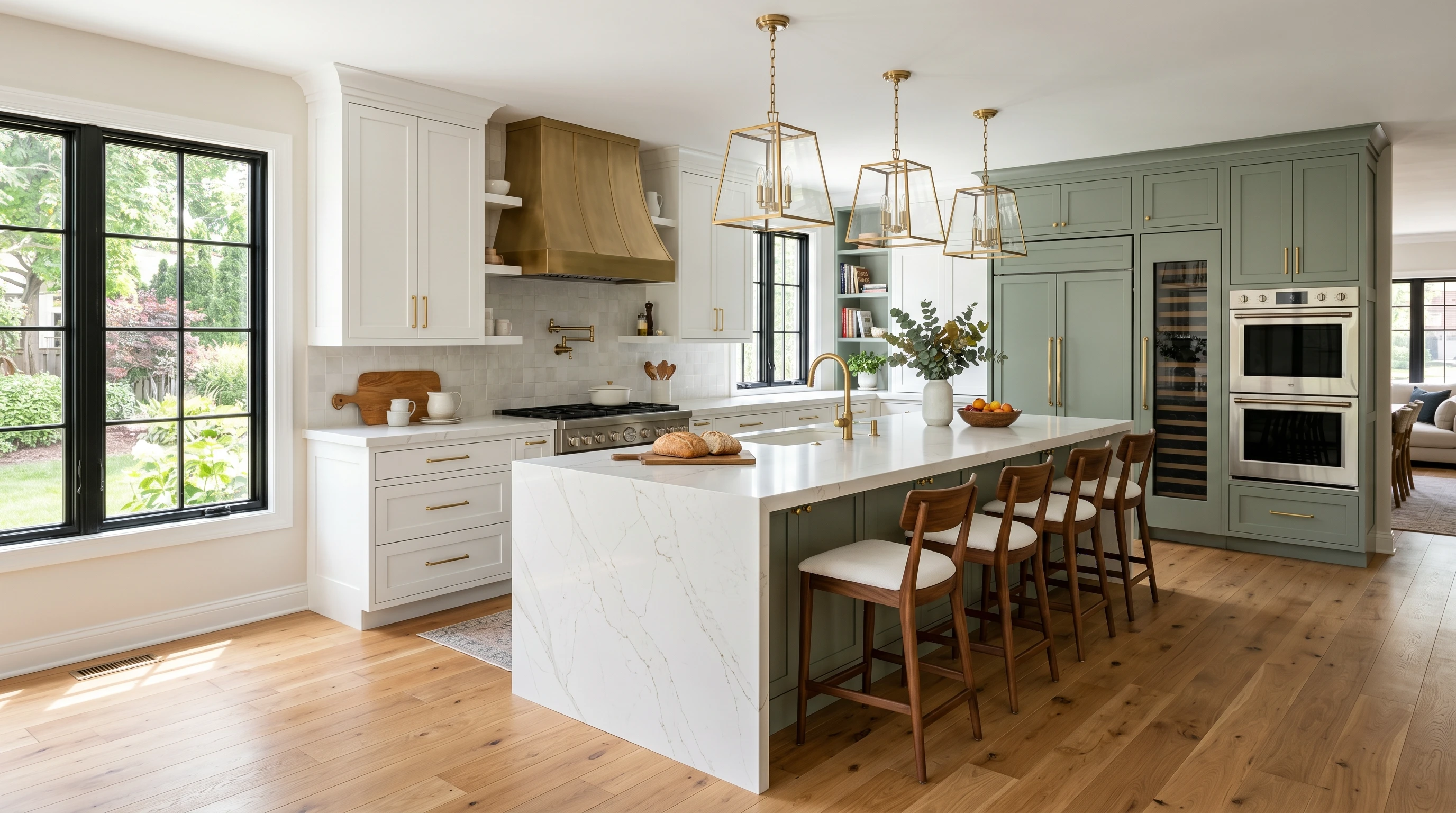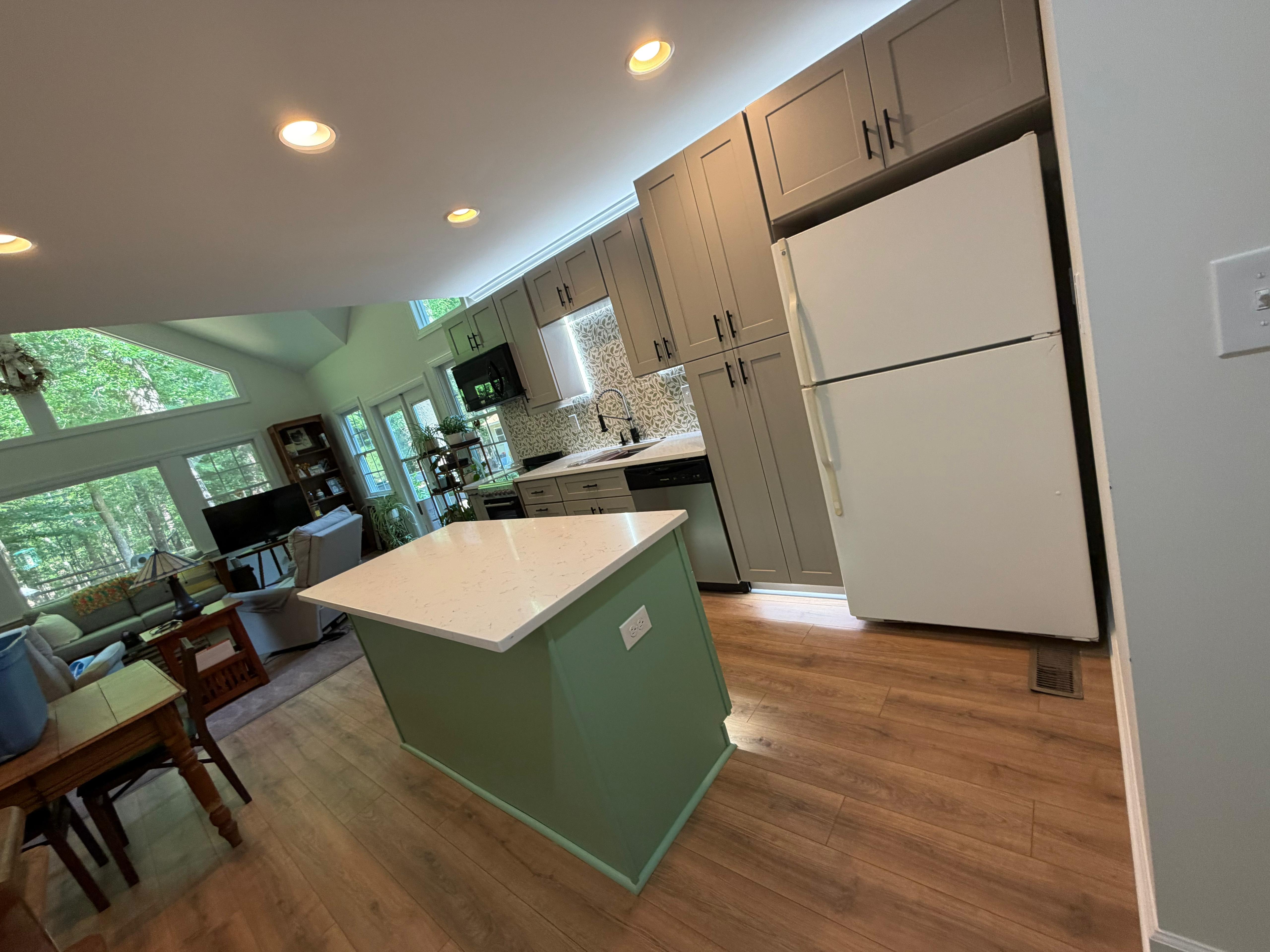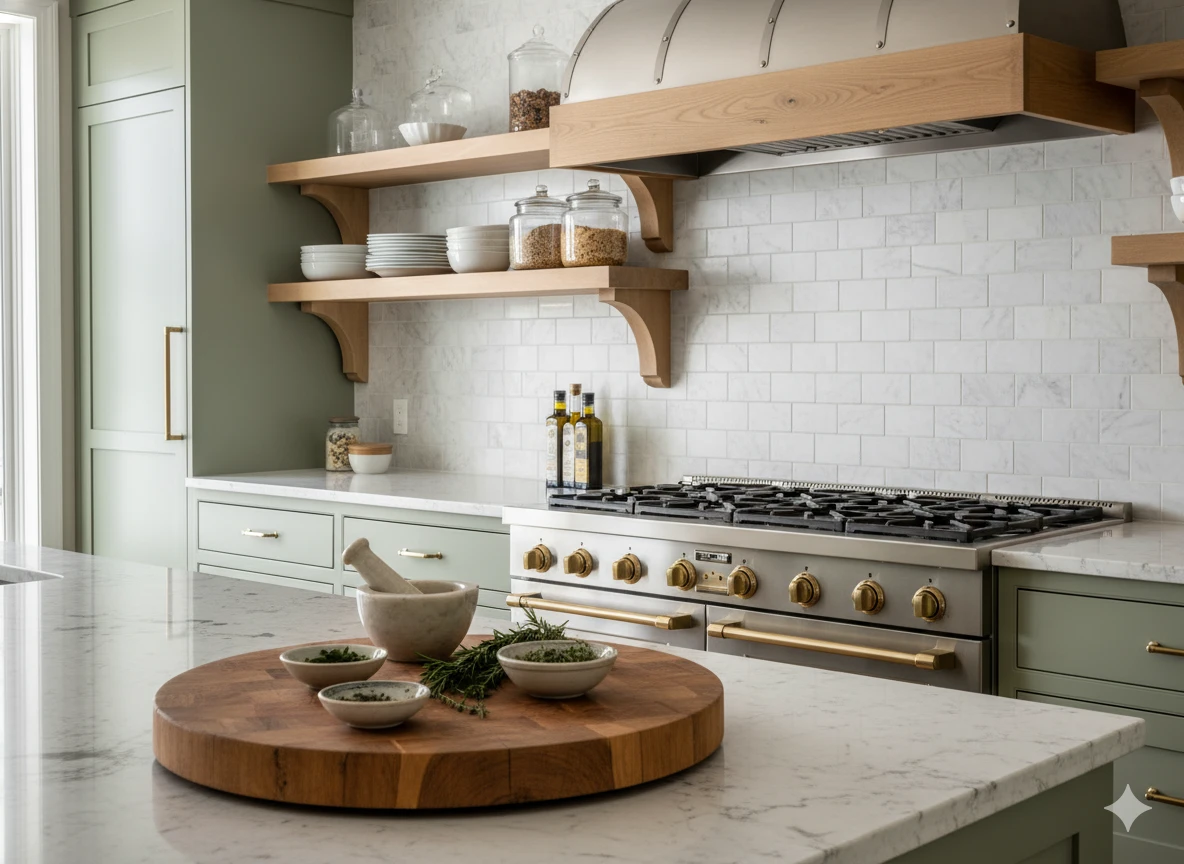
Countertops are the surface you'll touch a dozen times a day, and the two names you'll hear most are quartz and granite. They look similar in a showroom but behave quite differently in a real kitchen. Here's the honest comparison we give our own clients — no brand loyalty, just what each material is genuinely good at.
The quick verdict
| Factor | Quartz | Granite |
|---|---|---|
| Maintenance | None — never seal | Seal periodically |
| Durability | Very hard, non-porous | Very hard, heat-loving |
| Look | Consistent, designed | Unique, natural veining |
| Heat | Use trivets | Excellent |
| Cost | Mid → high | Mid → high |
Durability
Both are extremely hard and resist scratches and chips in normal use. The key difference is porosity. Quartz is an engineered surface (ground natural quartz bound with resin), which makes it non-porous — liquids can't soak in. Granite is natural stone with microscopic pores, so it can absorb a spill if it isn't sealed. One practical caveat: the resin in quartz is sensitive to high heat, so a hot pan straight from the stove can mark it. Granite shrugs off heat better, but we recommend trivets for either.
Maintenance
This is where quartz pulls ahead for busy families: it never needs sealing and wipes clean with mild soap and water. Granite should be sealed periodically (often once a year, depending on the stone) to keep it stain-resistant. It's a small chore, but a real one.
If you want to install it and forget it, quartz wins. If you want a one-of-a-kind natural surface, granite is hard to beat.
Looks
Granite is a slice of the earth — every slab is unique, with movement and depth no two kitchens will ever share. That individuality is the whole appeal, but it also means you should hand-select your actual slab. Quartz offers consistency and control: predictable patterns (including convincing marble looks), uniform color across slabs, and easier matching for large islands or seams.
Cost
People assume one is clearly cheaper — they're not. Mid-range quartz and granite land in a similar bracket. Costs climb at the top for both: rare, exotic granite slabs and premium designer quartz lines each reach the high end. Edge profiles, slab thickness, and waterfall ends affect the total more than the material name itself. For how countertops fit the overall budget, see our guide on kitchen remodel cost in Raleigh.
So which should you choose?
- Choose quartz if you want zero maintenance, a consistent look, and easy matching across a big kitchen.
- Choose granite if you love natural, one-of-a-kind stone and want the best heat tolerance.
- Either works beautifully — the "wrong" choice is usually a material that doesn't match how you actually use your kitchen.
During your free 3D design with PB, you'll see your real slab options to scale in your actual layout before anything is ordered. Explore the full scope on our kitchen remodeling page, or book a consultation to talk through samples in person.
Key takeaways
- Quartz is non-porous and maintenance-free; granite needs periodic sealing.
- Granite handles heat better; quartz can mark under a hot pan — use trivets either way.
- Granite is unique and natural; quartz is consistent and easy to match.
- Cost overlaps heavily — edges, thickness, and rarity drive price more than the name.
- Pick the surface that fits how you cook and clean, not just how it looks in the showroom.